Northern Colorado Is Spending Billions on What Comes Next
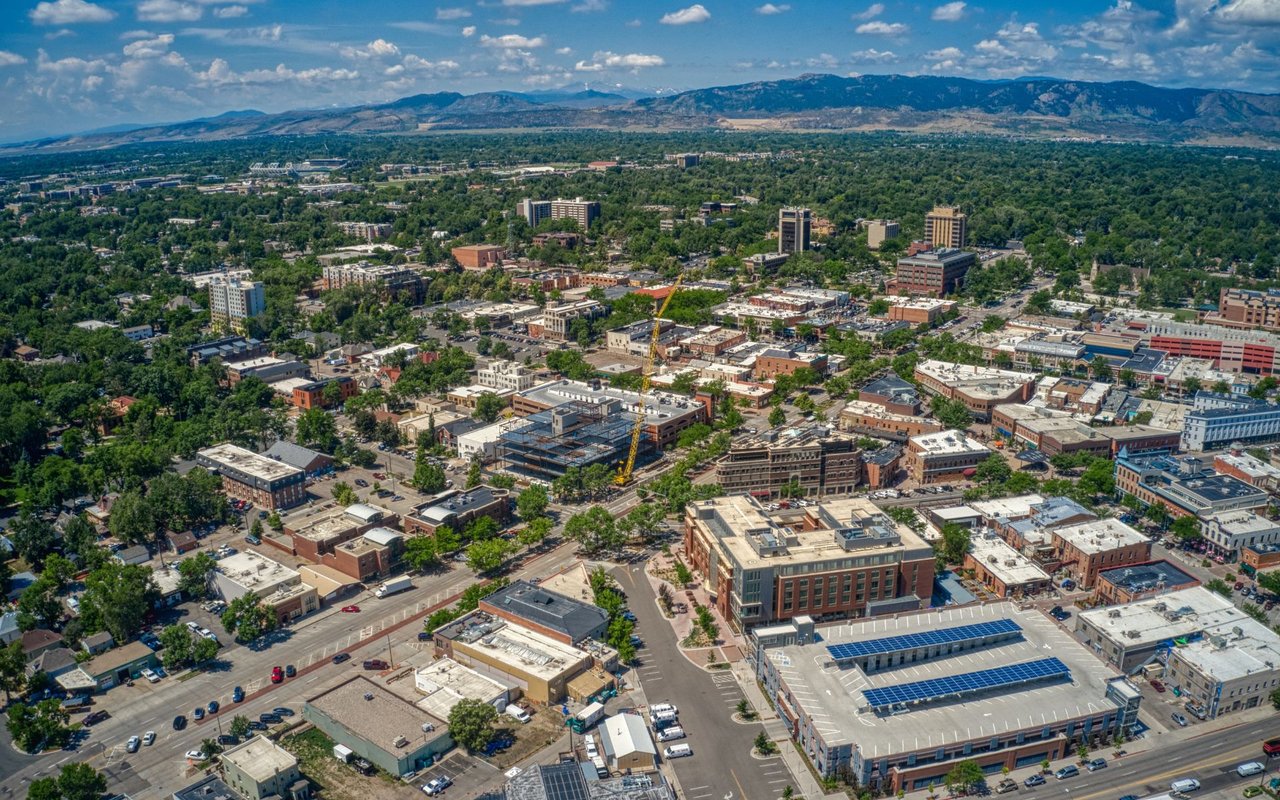
Northern Colorado has spent years talking about growth like it's something coming later. At this point, later is here. Apple is putting $1.5 billion into modernizing Broadcom's Fort Collins manufacturing operation. Avenue South is finally coming out of the ground at Centerra; Costco and Whole Foods are coming to the I-25/34 corridor; hundreds of new apartments and rental homes are being built in Fort Collins; and Windsor has blown up. Greeley keeps pushing west; both regional airports are expanding; Boondocks is under construction in Johnstown; and Northern Colorado is now being considered for a $350 million entertainment venue.
Then there are the things that make all that growth possible but aren't nearly as exciting to talk about: water storage, pipelines, roads, airports and other infrastructure. And, because apparently we needed one more thing to argue about, we're getting a passenger train.
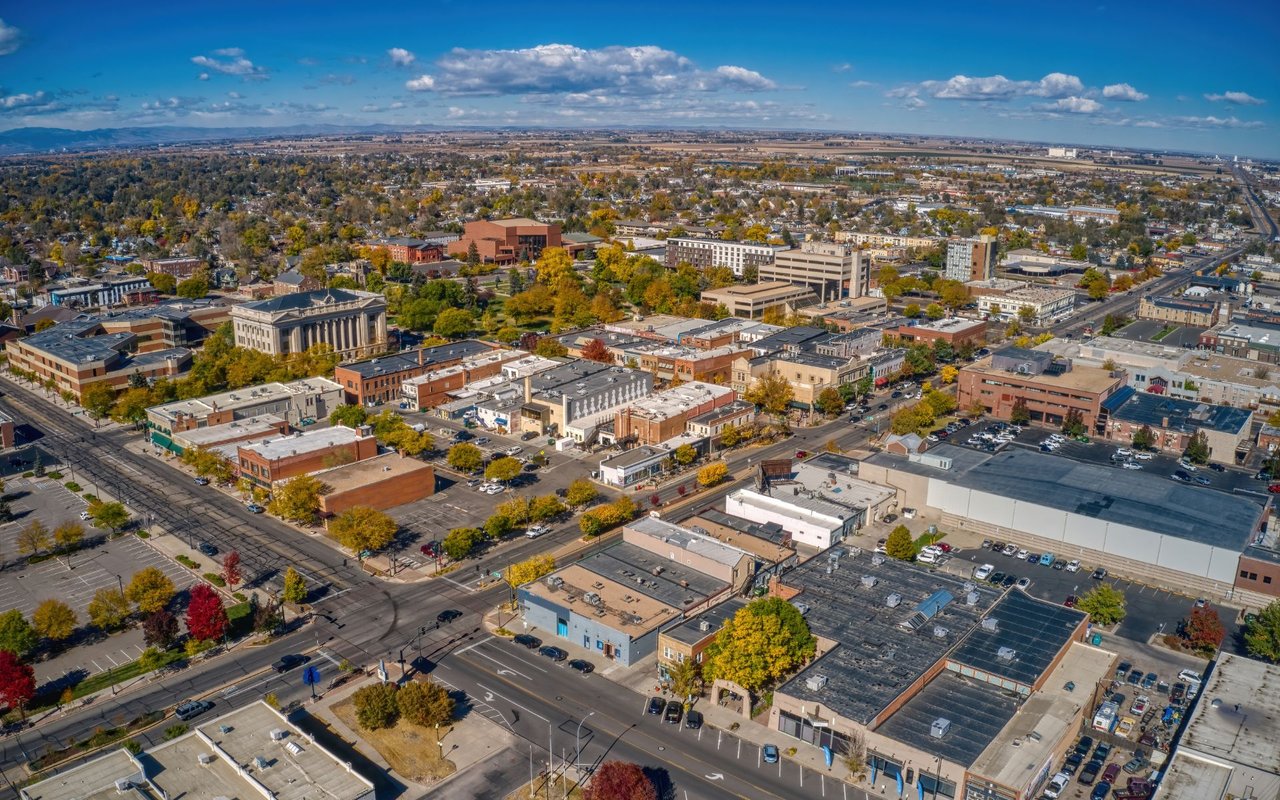
Put all of this on the same map and it stops looking like a bunch of unrelated development announcements. Northern Colorado is preparing for a much larger version of itself, and the old lines between Fort Collins, Loveland, Windsor, Johnstown and Greeley matter less economically than they used to. Some of what's happening is overdue, some of it is exciting, and some will probably look completely different by the time it's finished. And some of it, particularly the train, I think we're being oversold.
Apple's $1.5 Billion Broadcom Investment Is Bigger Than Fort Collins
The biggest economic announcement of 2026 landed at a facility that's actually been part of Northern Colorado's technology economy for decades. Apple announced in July that its expanded agreement with Broadcom will exceed $30 billion nationally and produce more than 15 billion U.S.-made chips. As part of that agreement, Apple is backing $1.5 billion in capital investment to expand and modernize Broadcom's manufacturing operation in Fort Collins.
That campus has roots going back through HP, Agilent and Avago. Northern Colorado didn't suddenly become a semiconductor market because Apple discovered Fort Collins in 2026; the workforce and manufacturing history were already here. Apple is putting an enormous amount of money into bringing that operation forward, and the impact won't stop at the Fort Collins city limit. Construction companies, engineers, suppliers, contractors and employees operate throughout Northern Colorado. Someone working at Broadcom could live in Windsor, Timnath or Loveland and commute into Fort Collins, while companies supporting the operation don't necessarily have to be based in Fort Collins either.
We don't know the eventual regional job count or economic multiplier, and there's no reason to make one up. What we do know is that $1.5 billion being invested into advanced manufacturing in Northern Colorado will create economic activity well beyond the property where the money is being spent. It also comes at a time when Fort Collins is adding a surprising amount of housing.
Fort Collins Isn't Done Building
There's a tendency to talk about Fort Collins as though there's nowhere left to build. Compared with Windsor, Timnath, Johnstown or Greeley, available land is certainly getting tighter, but drive the east and north sides of town and there's still plenty happening. The Collins at Union Park is bringing 457 apartments, Crowne at Suniga adds another 267 units near North Lemay, and The Flats at Hansen Farm near South Timberline adds roughly another 250.
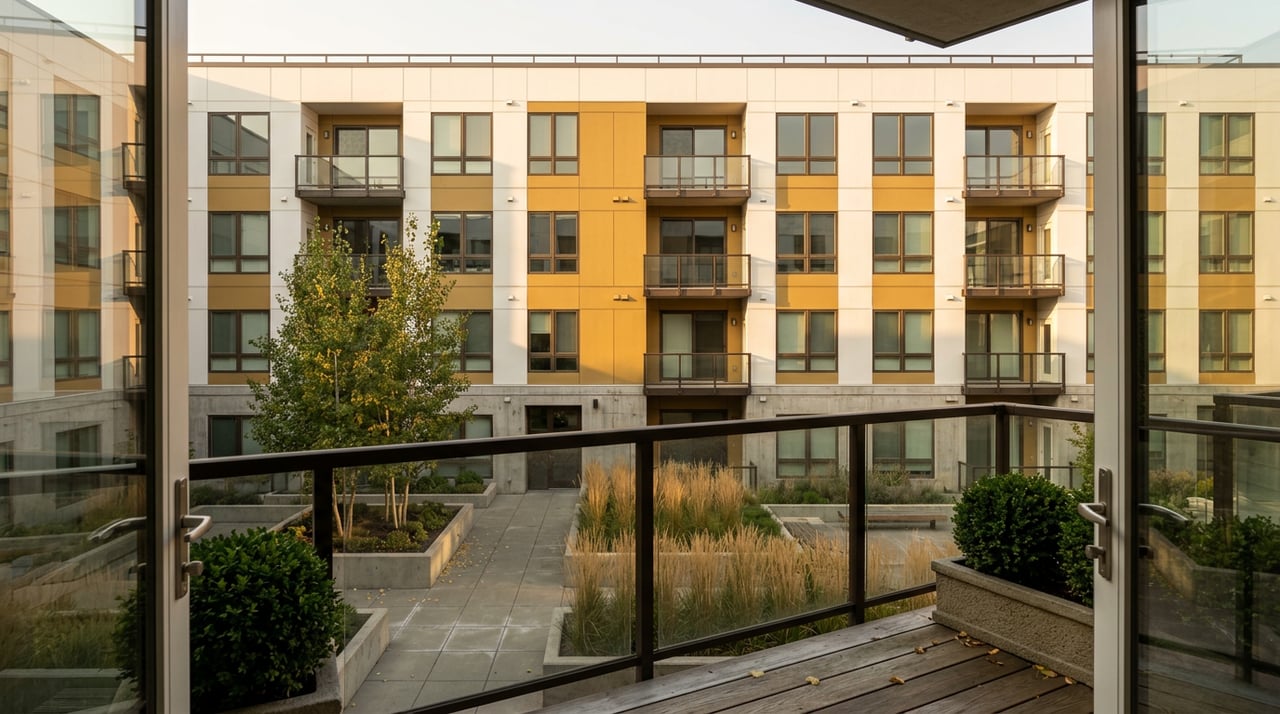
Ascend at Old Town is different from the usual apartment project, with newly built one-, two- and three-bedroom rental homes and townhome-style product on the north side. Bloom is another newer rental community adding one-, two- and three-bedroom homes with garages. That's a substantial amount of new rental inventory before getting anywhere near Montava, whose long-term plan calls for roughly 4,200 homes on the northeast side of Fort Collins along with commercial space, schools, parks and the infrastructure needed to turn what is largely undeveloped land today into another piece of the city.
Will Montava's final version look exactly like today's master plan? Probably not. Projects that large evolve over years. What's more interesting is where the construction is happening. Fort Collins isn't expanding evenly anymore; much of the remaining opportunity is east, northeast and on the large parcels where developers can still put hundreds of units together. Increasingly, Fort Collins isn't where most of Northern Colorado's easy growth is anyway.
I-25 and Highway 34 Barely Resemble the Same Place
Anyone who has lived here long enough remembers when I-25 and Highway 34 was mostly somewhere you drove through. That isn't what it is anymore.
Avenue South is now under construction at Centerra. The 140-acre project eventually calls for nearly 2,000 residences, along with restaurants, stores, offices, parks and entertainment space. A 37,000-square-foot Whole Foods Market is planned there, Hensel Phelps is putting its Northern Colorado headquarters in the development, and a new Costco is planned nearby at US-34 and Centerra Parkway.
Cross into Johnstown and it keeps going. Boondocks broke ground in May on a roughly 10-acre entertainment complex at 2534, and the plans include go-karts, two miniature-golf courses, bumper boats and a ropes course outside, with bowling, arcade games, laser tag, dining and event space inside. Texas Roadhouse is also planned immediately south of it.
Those announcements are interesting, but the housing explains why they're happening. Johnstown says more than 6,900 residential units are planned along the broader Highway 34 corridor. Add the existing Centerra neighborhoods, Kinston, Avenue South and everything else already built or planned around the interchange and the pattern becomes obvious. The Loveland/Johnstown line still matters to the cities collecting the sales tax, but to everyone driving around out there it increasingly feels like one place. I-25/34 has become its own regional center for housing, jobs, shopping and entertainment. It's not downtown Fort Collins and isn't trying to be.
Windsor Has Become Northern Colorado's Castle Rock
Windsor hasn't quietly grown. It has blown up. The Census Bureau estimates the town reached roughly 43,800 residents in 2025, about 34% above its 2020 population base. Anyone who has driven around Water Valley, Raindance or the newer edges of Windsor doesn't need a Census table to know something happened.
The easiest Colorado comparison is Castle Rock. The two towns obviously aren't identical, but the pattern is familiar: newer subdivisions spread outward, more expensive housing follows, rooftops and household spending increase, and eventually the major retailers that once expected residents to drive somewhere else decide there are enough customers to come to them.
A new King Soopers is planned as the anchor for Hollister Lake Marketplace, while Windsor has also approved a Walmart development near 17th Street and Main/Jacoby Road. Neither sounds particularly glamorous compared with a $1.5 billion semiconductor investment, but that's exactly why they're useful indicators of where Windsor is headed. Retailers that size follow rooftops, traffic and spending power, and Windsor now has enough of all three that residents aren't automatically expected to drive to Fort Collins, Loveland or Greeley for everything anymore.
Greeley Is Building More Than Houses
Greeley's growth story is different. Housing and relative affordability have helped push development west, but Greeley is also adding employment and institutional investment that makes it less useful to describe the city simply as Northern Colorado's cheaper housing option.
The University of Northern Colorado's new College of Osteopathic Medicine opens in 2026 and is expected eventually to train 632 future doctors. The City of Greeley projects roughly $1.4 billion in economic impact from the medical school and thousands of healthcare-related jobs. Aims Community College is also adding its new Workforce and Innovation Center, while Greeley-Weld County Airport is expanding with new taxiways and additional property for aviation development.
Then there's Cascadia. The enormous west Greeley proposal includes thousands of homes and a major entertainment component tied to a new Colorado Eagles arena, hotel and water park. Voters repealed the project's zoning approval earlier this year, and the fight has since moved into court. I wouldn't write Cascadia off. There is too much money, land and development pressure involved to assume that vote was the last chapter. What eventually gets built could change considerably, but western Greeley is going to remain one of Northern Colorado's biggest growth areas.
VENU Wants to Bring Its $350 Million Entertainment Model Here
Colorado Springs-based VENU is in discussions with several Northern Colorado communities over a proposed $350 million-plus entertainment destination with capacity for roughly 12,500 people. No location has been publicly selected yet, but the company itself is part of what makes this proposal interesting.
VENU doesn't build generic concrete arenas. Its amphitheater model leans heavily into the experience surrounding the show, including its signature Luxe FireSuites with individual fire pits, premium hospitality areas and indoor-outdoor designs. If Northern Colorado lands the project, it would bring a type of large purpose-built concert experience the region simply doesn't have today and could capture touring acts that currently pass Northern Colorado and head straight to Denver.
More telling is that a company believes Northern Colorado can support a $350 million entertainment destination at all. Twenty years ago, the region was still commonly treated as a collection of separate smaller cities. Investments like this increasingly treat it as one market.
Foothills Mall Still Has to Figure Out What It Wants to Be
Then there's Foothills Mall. Fort Collins has already watched one expensive attempt to reinvent this property, and parts of it worked better than others. The College Avenue frontage remains extremely valuable; the traditional enclosed-mall portion is another story.
Recent ownership and financing activity has again opened the possibility of major redevelopment. I'm not putting much faith in renderings until equipment actually shows up because Fort Collins has heard big plans for this property before. But the land is too valuable and Fort Collins has too few large redevelopment sites left for Foothills to remain underused forever. Whatever ultimately happens there could become one of the city's more consequential infill projects. For now, it belongs in the “watch this space” category.
All This Growth Has to Drink Something
This is where Northern Colorado development gets complicated fast. You can approve 5,000 houses on paper tomorrow. That doesn't create the water to serve them.
Northern Colorado recently completed Chimney Hollow Reservoir west of Loveland, adding roughly 90,000 acre-feet of new storage to the regional system. Now the Northern Integrated Supply Project is moving toward construction after roughly two decades of planning, permitting, lawsuits and environmental review. NISP includes Glade Reservoir northwest of Fort Collins, with 170,000 acre-feet of storage, and Galeton Reservoir northeast of Greeley, with another 45,600 acre-feet. The project also requires pumps, canals and nearly 50 miles of pipelines to actually move the water where it's needed.
Northern Water expects NISP to provide up to 40,000 acre-feet of reliable water annually to participating Northern Colorado water providers, with major Glade construction currently expected to begin in 2027. Glade and Galeton aren't being built because Northern Colorado needs two more pretty lakes. They're being built because communities expect considerably more people and development in the decades ahead.
And this barely scratches the surface of how water works here. Northern Colorado's water can begin west of the Continental Divide, travel through tunnels and reservoirs, change ownership through water rights worth enormous amounts of money and ultimately determine whether land miles away can ever be developed. I've gone much deeper into that in Colorado Water Rights Shape Where the Front Range Can Grow, including Northern Water, Greeley's water portfolio, Colorado-Big Thompson storage and Thornton's controversial pipeline.
For this discussion, the takeaway is simpler: land doesn't create water. All the development happening above ground requires enormous investment in infrastructure most people will never see.
FNL Is Becoming a Much More Capable Airport
Northern Colorado Regional Airport between Fort Collins and Loveland is undergoing one of its biggest upgrades in years. Its primary runway is being widened from 100 to 150 feet, and the airport is also moving forward with a permanent air traffic control tower. Combined with the newer passenger terminal, those improvements make FNL considerably better equipped for larger aircraft and whatever future commercial service may eventually look like.
I've flown from FNL to Las Vegas many times, and it's hard to overstate how much better that experience was than using DIA. For me, it was roughly 20 minutes from home to the airport. Get on the plane, go to Vegas, and when I came home I was another 20 minutes from my driveway. No driving through Denver, no giant airport parking operation and no landing at DIA only to realize I still had another hour-plus drive before I was actually home.
The wider runway and tower could eventually have another benefit. A more capable FNL may be able to serve as an alternate for some aircraft diverted from DIA because of weather or other disruptions, alongside airports such as Colorado Springs. That's not as simple as “big runway equals DIA alternate”—aircraft type, runway requirements, weather, ground handling and airline arrangements all matter—but increasing FNL's capabilities gives the Front Range another option that didn't exist at the same level before.
Commercial flights have come and gone from FNL before, so I'm not going to pretend a wider runway suddenly guarantees Southwest or United shows up. I do know firsthand how useful this airport can be when scheduled service works, and these improvements give it considerably more potential than it had before.
Greeley-Weld County Airport is expanding at the same time, adding taxiways and opening additional property for aviation businesses and larger corporate aircraft. One regional airport investing could be dismissed as a local infrastructure project. Two doing it at the same time fits the larger pattern.
And Then There's This Damn Train
I should probably disclose something before going any further: I love trains. I hate this train plan. I'd love useful passenger rail connecting Fort Collins, Boulder and Denver. I just don't think three trains a day is the transportation revolution we're being sold.
Even the name doesn't do much for me. Colorado Connector has already been shortened to CoCo, which sounds more like a beach bar than a multibillion-dollar transportation project. The name isn't the real problem, though. The starter service is.
The current plan targets 2029 and calls for three daily round trips between Fort Collins and Denver, stopping in Loveland, Longmont, Boulder and communities farther south. Berthoud gets skipped completely. Later phases could eventually increase service to as many as 10 Fort Collins-Denver round trips per day, which would be considerably more useful. But that's not what we're getting first.
Try using the starter service for a normal workday. The working schedule puts the first southbound departure from Fort Collins around 6:30 a.m. With roughly a 90-minute trip, you're arriving in Denver around 8 a.m., assuming everything runs on time. Unless you work near Union Station, you're still not at work. Now you're walking, paying for a rideshare or transferring to RTD. Work until 5 p.m. and your trip home is dictated by one of only three northbound trains. Miss the one you need and you could be waiting hours. Who is doing this five days a week?
To be fair, CoCo calls itself intercity passenger rail rather than commuter rail. Fine. But then let's stop pretending three daily trains fundamentally change the I-25 commute.
The station locations create another issue. Most Fort Collins residents aren't walking to the proposed station near Drake Road, and Loveland's station is planned downtown while some of the region's biggest employment, housing and retail growth is happening miles east around Centerra, Avenue South, Johnstown and I-25. Ironically, there's already a mobility hub at Centerra with parking and regional bus connections, but the train isn't stopping there.
That means a lot of riders will still drive to the station, which raises some pretty basic questions. How much parking will there be? Will it be free, or are we adding parking to the cost of the ticket? What does secure all-day parking look like for someone leaving a vehicle before sunrise and returning late at night? If getting people out of their cars starts with driving your car to the train station, those details matter.
More passenger trains also mean more activity at existing grade crossings through Fort Collins and Loveland and more stopped traffic for everyone who isn't riding. That's a tradeoff I'd happily make for a heavily used transportation system. With three round trips a day, I'm considerably less convinced.
I can see where CoCo works: Broncos or Rockies games, concerts, a day in downtown Denver, Boulder trips, students, occasional business travel and people who can't or don't want to drive. Those are legitimate uses. But you're not taking the train grocery shopping, and you're probably not using it to reach most Northern Colorado employment centers.
There's also some ugly history behind the sales pitch. Longmont-area taxpayers approved RTD's FasTracks program more than 20 years ago and are still waiting for the Northwest Rail service they were promised. RTD is now dealing with its own structural budget problems and adjusting service while Colorado itself is operating in a tighter fiscal environment. CoCo is a separate project with different funding and is much further along than another line on a map, but taxpayers have every right to remember what happened last time they were promised Front Range passenger rail.
Northern Colorado doesn't need to be sold on the idea of passenger rail. It needs passenger rail that's useful. Three trains a day with hours between departures isn't a transportation revolution. It's limited intercity service being marketed like something much bigger.
Maybe it proves me wrong. I hope it does. I'd love a frequent, dependable train that makes leaving the car at home the obvious choice. Right now, it feels a little like selling ice in Alaska.
The Bigger Change Is the Region Itself
Twenty or thirty years ago, it made more sense to think about Fort Collins, Loveland, Windsor and Greeley as separate markets. They still have very different personalities, politics, housing markets and economies, but economically they're becoming harder to separate.
Broadcom can add jobs in Fort Collins and create housing demand in Windsor. Windsor can add thousands of residents who shop in Loveland or work in Greeley. Avenue South can sit inside Loveland while serving people from half of Northern Colorado, and Johnstown can collect the sales tax from someone who probably thinks they're still shopping in Loveland. Greeley can add a medical school while its residents commute west. New water infrastructure can serve communities scattered across Larimer and Weld counties. VENU can look at several separate cities and see one regional market large enough to justify a $350 million venue.
That's what makes this particular moment interesting. It's not Costco, Whole Foods, one semiconductor plant, one apartment project, one airport expansion or even a couple of enormous reservoirs. It's the amount of it happening at once.
Some projects will change, some will stall and some might disappear entirely. Cascadia is already showing how quickly politics can alter a development. VENU still doesn't have a home. Passenger rail could take longer than advertised. Montava will take years, and retail plans change all the time. But the broader direction is hard to miss.
Northern Colorado isn't waiting to see whether it's going to grow. It's spending billions figuring out what it's going to become.
If you're considering a move to Fort Collins, Loveland, Windsor, Greeley or elsewhere in Northern Colorado, Premium Apartment Locators helps renters, future homeowners and people relocating throughout the region compare communities and understand what they're actually moving into—not just what's available today, but what's being built around it.