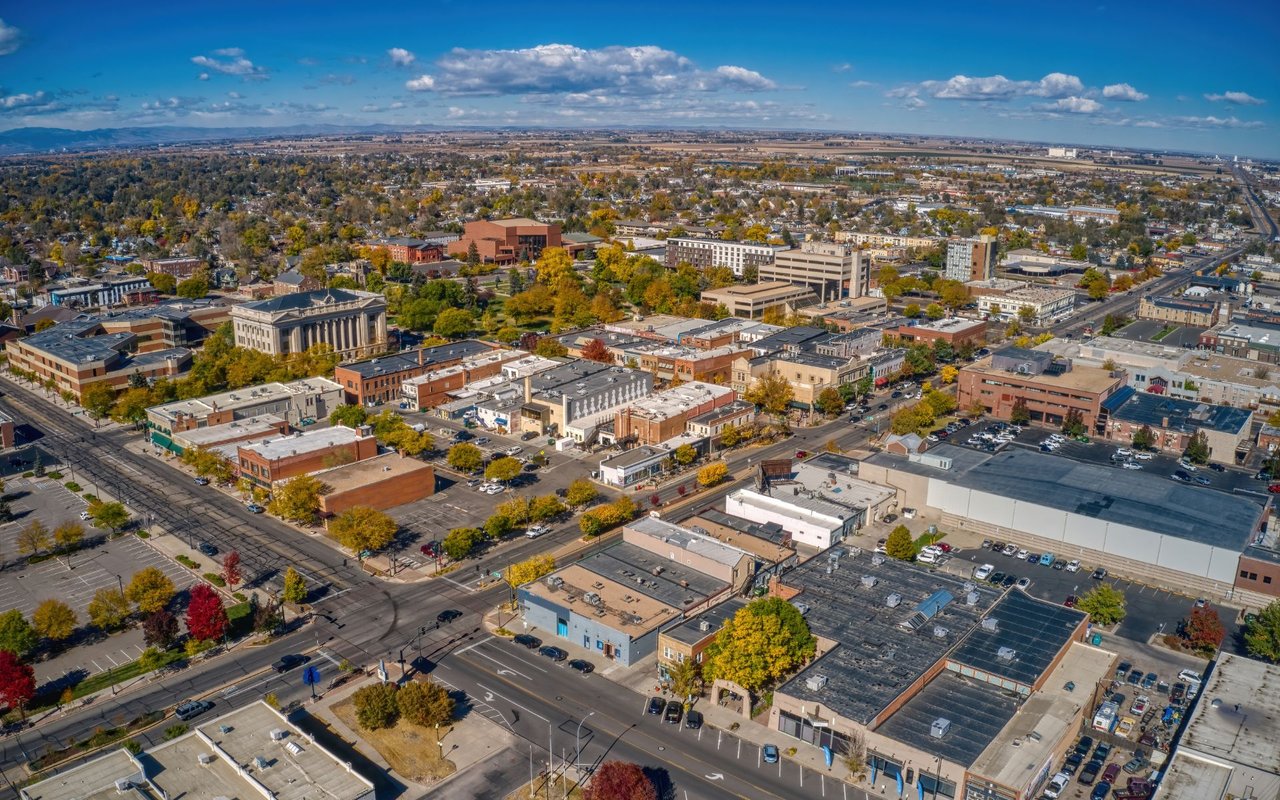
A leasing agent showing units near Stanley Marketplace this summer had a strange thing to explain to every prospective renter: yes, the average rent across Aurora keeps sliding, and no, that doesn't mean the building three blocks away is getting any cheaper to live in next year. The tour would end at a parking lot that, according to the new owner's own financing paperwork, won't be a parking lot much longer.
That contradiction is the real story in Aurora right now. The citywide number says one thing. The money says another.
The Number Everyone's Citing
As of August 2026, Aurora's median rent sat at $1,519, essentially flat month over month but down 5.5 percent from a year earlier. The month before, the figure was $1,513, down nearly 6 percent year over year, a decline that had already outpaced both Colorado's statewide rate and the national average. On paper, this reads as good news for anyone comparing Front Range cities: Aurora looks like the deal.
The mechanism behind that number is a hangover, not a trend. Metro Denver's apartment vacancy rate hit 7.6 percent at the end of 2025, the highest in 16 years, with more than 34,000 units sitting empty after a multi-year building boom flooded the market faster than renters could absorb it. By spring 2026, industry officials were already describing a turn. Drew Hamrick of the Apartment Association of Metro Denver put it plainly to the Denver Gazette in April: "The product on the market all at once caused prices to fall." He added that the market was starting to stiffen as that glut worked through the system.
If vacancies were already tightening metro-wide by April, why was Aurora's own rent still sinking through August? The answer isn't that Aurora is somehow behind the recovery. It's that "Aurora" isn't one market. It's several, and they're not softening at the same speed.
Two Corridors the Money Didn't Get the Memo On
Two deals closed or moved forward in Aurora this year that only make sense if you assume rents in those specific corridors are going up, not down.
The first is industrial, but it drives rooftops. Amazon paid roughly $23.6 million in August for 70 acres at 825 N. Lisbon St., with a development application already filed for a distribution center spanning nearly 1.2 million square feet. That purchase followed the company's opening of a 625,000-square-foot cross-dock facility at 6300 Powhaton Road in June, the first facility of its kind in the state. Distribution centers of that size don't get built speculatively. They get built where a company expects sustained hiring, and workers who get hired near Denver International Airport tend to look for housing close to the commute, not across the metro.
The second is retail, and it's the one renters can actually see. Stanley Marketplace, the ten-year-old food-and-retail hub built inside a former aviation factory, went under contract this spring to Magnetic Capital, a Denver firm behind the 2nd & Adams project in Cherry Creek North. The financing memo describes plans to replace the marketplace's south parking lot with roughly 300 new apartment units across two buildings, add a 150-room hotel nearby, and expand outdoor programming tied to the Westerly Creek restoration. Commercial listings for the property already advertise more than 900 apartments open or under construction within walking distance. Jonathan Power, Stanley's retail director, told Axios he expects the new ownership to preserve what made the marketplace work in the first place.
Neither of these is a bet on a discount. They're bets that people will pay to live near a distribution job corridor and a destination food hall that just drew a nine-figure buyer.
| Corridor | What's landing there | What it signals for renters |
|---|---|---|
| Stanley Marketplace / Northwest Aurora | $36.7 million sale, plans for roughly 300 new apartments plus a 150-room hotel | New supply, but anchored to a proven draw. Today's softer rent here is likely a shorter-lived window. |
| Northeast Aurora, near Denver International Airport | Amazon's $23.6 million purchase of 70 acres for a distribution center, on top of a cross-dock facility it opened in June | Warehouse jobs are landing in the corridor faster than new apartments are being built to house the workers filling them. |
| East Colfax | A city-backed Bus Rapid Transit project advancing through the planning process, alongside a preservation fight over aging buildings | Investment here is raising costs at the bottom of the market even as the citywide average falls. |
Where the Deal Doesn't Actually Get Better
Not every corridor getting attention is getting cheaper for the people already living there. Along East Colfax, the city has been advancing its Bus Rapid Transit line in partnership with the Aurora-South Metro Small Business Development Center, a genuine infrastructure upgrade. At the same time, older rental buildings along that same stretch are caught in a squeeze that has nothing to do with metro-wide vacancy math.
Carson Bryant, housing director for the East Colfax Community Collective, described the bind to the Colorado Sun earlier this year: aging buildings that need real repair work often have to convert to market rate once renovated, because state and federal subsidy programs are built to fund new construction, not preservation. As Bryant put it, once a building needs that level of work, "you basically need to make it market rate to make it worth your while." The Colorado Sun's analysis found that out of roughly 11,000 homes funded through the state's main affordable housing measure, fewer than 20 units met the definition of preservation rather than new supply.
That's the counterweight to the falling citywide average. A number can drop overall while rents at the low end of a specific corridor climb, because the properties getting reinvestment there are moving to market rate, not staying affordable.
What This Means If You're Comparing Neighborhoods, Not Just Prices
A single median doesn't tell you which Aurora you're renting into. The texture does. Northwest Aurora, just minutes from Stanley Marketplace, already draws young families toward rental homes with fenced yards and basement play space, priced below what comparable space costs closer to downtown Denver. The neighborhood's international grocers, Ethiopian, Korean, and Mexican markets among them, sit walking distance from most rentals, and street parking remains easier than it is in the city core, a real advantage during Colorado's snow emergencies. A few miles east, Dayton Triangle offers commuter-friendly units with genuine Front Range views, at the cost of amplified highway noise from I-225.
Those two corridors, three miles apart, are living through completely different investment stories even though they'd both show up under the same "Aurora" line on a rent report. If you're comparing neighborhoods rather than just chasing the lowest number on a portal, the question worth asking isn't "what does it cost today." It's "who's building or buying near here, and what does that tell me about next year's renewal."
That's a harder question to answer from a listing page than it is from someone who tracks these deals as they land. If you're weighing Aurora against other spots along the Front Range, or trying to figure out which of its corridors actually fits your commute and your budget two years out, not just this one, Premium Apartment Locators can walk the specifics with you at no cost. Start Your Free Apartment Search and let's figure out which Aurora you're actually renting into.